The Fall's first album release was Live At The Witch Trials. It was recorded in a single day in December 1978, and was mixed the following day. When it was released three months later, Mark E. Smith was the only original member of the band remaining.
The opening track is Frightened, which Smith wrote when he was 16. It's about taking speed and feeling frightened. One thing that strikes me about this song is how together everything is. The drums, guitar, bass and keyboards are all an important part of the song. There's a wall of sound in the chorus that Sonic Youth would be proud of. Smith's vocals sound confident and assured.
Crap Rap 2/Like To Blow sounds more like the type of song you would use to open an album. It even includes the trademark introduction often used at live shows. It really grabs my attention when I hear it. Smith always said that The Fall were at their best live, so I wonder if this quick approach to recording was in part to achieve that sound on record? More drug references in this song. Rebellious Jukebox sounds like another comment on the state of the music industry with the band being the jukebox in the title (playing what they like instead of the accepted norm). Listening to The Fall feels like entering another world and I can feel that on this album.
No Xmas For John Quays is one of my favorite songs on the album because of the tempo and vocal delivery. It's relentless and the repetitive beat is hard to escape. The live version on Totale's Turns is arguably even better. I remember annoying people at work with this when I first started working. Listening to this album, anyone would think that The Fall spent all their time playing music or hanging out in pubs.
Mother-Sister! doesn't seem to be about much, but there's an interesting take from a quote by Martin Bramah on The Annotated Fall site. It suggests that his family referred to his mother as his sister so they wouldn't have to explain the absence of his father. I like the guitar tone in this one and the ranting delivery of the lyrics. Side 1 ends with Industrial Estate, which is another reminder that you are in The Fall's world. Can you imagine The Beatles singing this? It's almost poppy with the bouncy delivery, but the lyrics and scratchy guitar keep it gritty.
Side 2 kicks off with Underground Medecin, which seems upbeat and hopeful in the context of this album:
I found a reason not to die
A reason for the ride
The spark inside
There are a variety of musical styles on the album, with the most dominant being short rants or measured dark narratives. Two Steps Back falls into the latter category and it's another song full of drug references. I particularly like the way that the band is given time to flesh out the song with a lot of exploratory instrumentals. It's a good contrast to the shorter rants. A lot of Smith's lyrics make me laugh, but I'm generally more into the style of music and the way the lyrics are delivered than the actual meaning of the songs. This is true when I listen to any band.
Live At The Witch Trials brings things to an abrupt halt and is more prose than song. It's a typical Smith statement which is half sarcastic and half serious. It leads into the complete rant which is Futures And Pasts. I'm not sure whether it is about one of Smith's experiences, or just life in general, but I love the tempo. Music Scene was a live favorite that Smith once introduced as "this one lasts about three hours." Being a huge Modest Mouse fan, this reminds me somewhat of Truckers Atlas in that it goes on and on with the band just improvising all the way. I like that the riff from Repetition is thrown in there and everyone just seems to be having a blast.
Live At The Witch Trials contains an interesting mix and showed that The Fall were a band with a lot more depth than most of their contemporaries. If you look back to 1979, it was a weird time. Pink Floyd had a Christmas No. 1, Joy Division released Unknown Pleasures, and The Fall released their first two studio albums. This was an exciting debut and I wish I could go back to 1978 and hear these songs live.
Bass – Marc Riley
Drums – Karl Burns
Electric Piano – Yvonne Pawlett
Guitar – Martin Bramah
Vocals – Mark E. Smith
My Fall collection consists of 81 releases on vinyl or CD, including a few on both formats. I've decided to write a series of reviews explaining why I love some of these albums.
This is the first band I saw play live and I immediately loved the concert experience. All I could think about was when I would be able to go to another concert. I had missed so many opportunities to see the bands I liked.
The first studio album was Live At The Witch Trials, released in March 1979. However, The Fall were touring for almost two years before that release. A compilation of singles and demos covering those two years was eventually released in 1981, and that's where I am going to start.
I've often thought that the first album you hear by a band is the one that you end up rating higher than everything else because it introduces their sound to your ears. For me, the first Fall album that I bought was Grotesque. I think, for that reason, I somehow missed the significance of this Early Fall compilation. It was released in 1981, so The Fall already had three studio albums and a live album to their name by the time I bought this compilation of singles and a demo. After reading about the formation of the band and looking at the songs they played at the early shows, this release now seems much more important than it did at the time. I almost feel like I am discovering the music for the first time. I eventually added most of the singles that make up this album to my collection, but I love hearing it as a coherent piece. I feel like I'm closer to the songs than I ever was.
Repetition was probably played live more than any other song during those formative years. It's like a statement of intent for what was to come. When I listen to those lyrics, it describes The Fall. I've since learned that Martin Bramah was going to be the vocalist, but Mark E Smith seized that role because his guitar-playing wasn't that good at the time? Like most of my favorite vocalists, Smith can't really sing. However, he's extremely effective and I've learned to love his unique delivery-ah. I can understand why a lot of people would hate the music; it's raw; it's unconventional; it's not designed to be smooth or pleasant. Repetition is a raw song, as many of the songs on this album are. But this sounds like The Fall already, and it has Smith's wry humor in the lyrics. Repetition is a vital part of The Fall's sound.
Bingo Master's Breakout and Psycho Mafia are arguably an easier listen. Both are faster and a lot more bouncy than the plodding delivery of Repetition. This sound is closer to punk than the album's opener. One thing that jumps out at me listening to this is the vast amount of information in the lyrics and it feels like an assault.
Various Times offers something completely different. This is a song that narrates a story and it grabs me and draws me in. The band gets to showcase its skills here, with the heavy bass line and the drums playing an important part. It feels like it carries more weight than the two previous songs. Over the years, this structure appears regularly. This song wouldn't feel too out of place on Hex Enduction Hour. I don't remember anything else sounding like this at the time. It's The New Thing ends Side 1 and it's another bouncy track. As with many Fall songs, it talks about the music business. Smith was obsessed with singing about the industry, journalists and how inept most other bands were at the time.
I remember sitting around for hours with friends trying to figure out some of the lyrics in Rowche Rumble from the Totale's Turns version. It wasn't easy with no Internet and nothing to use as a resource. It took ages before we decided on "beer and speed is okay, but wanting full use of your body isn't." One of us ended up making a tape which just repeated that song about 10 times. It was a strange world full of Swiss gnomes, and we were hooked. Incidentally, I highly recommend The Annotated Fall website if you are curious about the lyrics and their possible origins.
In My Area introduces us to a dwarf and a doppelganger. Many of Smith's lyrics were taken from literary works he had read or films that he had seen. Other influences came from his own surroundings. Dice Man was based on Luke Rhinehart's novel and it's about having the ability to change, as The Fall did with their musical style on a regular basis.
According to Smith, Psykick Dance Hall No.2 was written about a building in his area which used to be a dancehall and ended up hosting meetings for old psychic women. I particularly like these lyrics which are somewhat prophetic:
When I'm dead and gone
My vibrations will live on
In vibes not vinyl through the years
People will dance to my waves
The Fall took influences musically from Can and The Velvet Underground, among others. A lot of their songs from this period feature a scratchy, tinny guitar sound. The lyrics often favor the stream of consciousness method that Don Glen Vliet (Captain Beefheart) was so fond of.
2nd Dark Age is a rant about the general state of things and namechecks ABBA. There's a lot going in in this song lyrically, despite its short running time. Fiery Jack has a great intro and uses the repetitive style described in the album's first song. It describes a particular type of character that Smith saw in people around him; hard men with hard lives who coped with their existence by drinking and using drugs.
This collection of songs seems heavily focused on life in Smith's town. The band's sound is raw and gritty, and just starting to form some of the sounds that I grew to love over the years. When I listen to Early Years, I am magically transformed to the time when I was just starting to form my own opinions about the music I liked, rather than go along with the accepted sounds delivered by what was played on the radio and TV. I realized that some of the rock albums I owned were pretty uninteresting compared to post punk and The Fall. My taste started to change.
I fully accept that The Fall are an acquired taste. Smith's voice clearly annoys a lot of people. The lyrics might appear like total nonsense if you didn't grow up in England or haven't explored some of the things referenced in the songs. But I find a lot of this funny in a dark way, and I love the layers of sound. Musicians often seem to be doing their own thing, but it somehow comes together. This happens to an even greater extent when we get to albums just a couple of years later, but I'll cover that another day.
Early Years is a fascinating glimpse into the origin of a great band. I enjoy visiting this formative era and I'm looking forward to continuing the journey. This isn't where I would begin if I were introducing someone to The Fall, but I would definitely suggest checking it out when they are familiar with the band. It's a rewarding listen.
Here's Rowche Rumble:
Bass – Marc Riley (tracks: Side A), Stephen Hanley (tracks: Side B), Tony Friel (tracks: Side A) Drums – Karl Burns (tracks: Side A), Mike Leigh (tracks: Side B) Guitar – Craig Scanlon (tracks: Side B), Martin Bramah (tracks: Side A) Guitar, Keyboards – Marc Riley (tracks: Side B) Keyboards – Mark E. Smith (tracks: Side B), Una Baines (tracks: Side A), Yvonne Pawlett
Modest Mouse started making music around 25 years ago and their sound has evolved in all kinds of ways since that beginning. I remember how my own introduction to the band found me loving The Moon & Antarctica and The Lonesome Crowded West, but I needed more time to fall in love with debut album This Is A Long Drive For Someone With Nothing To Think About. The reason was that the production was so raw and I found it jarring compared to some of the things I listened to on a regular basis. I now wonder how I would attempt to introduce someone with no previous exposure to the band to this wonderful music.
Some will love the new sound because the band often performs with eight or nine members on stage and the layers of sound are dense and rewarding; others will scream that the old stuff is the best. Yet another type of fan will have discovered the band through Float On and insist that Good News For People Who Love Bad News was the highlight. In my case, I love it all. If you picked the least great Modest Mouse album, I would still choose it over any album by any other band.
In order to reach the level of appreciation that I feel for Isaac Brock's music, you'll need to do a couple of things:
The first thing is to embrace all the rough edges. If you need your vocals to sound like Jeff Buckley, look elsewhere. Isaac can sing calmly and in tune, but he's just as likely to scream something at you with the slight lisp that still remains. He delivers his lyrics like he means them and sometimes SHOUTS for no apparent reason. This is all part of the charm if you have managed to embrace the sound of his vocal delivery. The guitar sound is also a bit unusual because of all the harmonic bending. That may be the most definitive thing in the band's sound and I love it.
The other thing is repeat listens. Most music is full of simple structures with a chorus and hooks that are easy to recognize. You can hear those songs and feel like you know them on the first listen, but Modest Mouse has layers. There's a lot going on underneath. Jeremiah Green's drumming and the multitude of supporting musicians are all part of the magic. You can't fully love the music until you know it well enough to know what is coming next. That takes a bit of work, but the reward can be enormous. It was for me and I will never be the same.
For this particular project, I decided to make a playlist to showcase Isaac's music. I say it in those terms because I have included two Ugly Casanova tracks. I set myself the following rules:
An unreleased song to demonstrate the quality of music that doesn't even guarantee a release
Two tracks from each Modest Mouse album (including compilations)
One track from each Modest Mouse EP
Two songs from Ugly Casanova
The latest single
The songs are mostly in the order in which they were written. I did it that way so that you can hear the evolution of the sound.
Another thing to note is that I didn't simply choose my outright favorite songs. Some songs were chosen to illustrate a particular style or sound, or perhaps because of the lyrical insight. Float On was a breakthrough for the band and gave them a new level of exposure and popularity, so it is in for that reason. I wanted some banjo songs and that's why they are in.
Anyway, I hope that you like what I have done and that you get something from it. That's especially true if you are new to the band. For those who are already fans, what songs would you have chosen for the purpose of showcasing the band for new listeners?
The videos were chosen because of their sound quality. If you want live versions or other versions, there are plenty on YouTube or in my other playlists.
For the record, here are the 25 songs I chose to introduce newcomers to Isaac Brock's music. Let me know yours or what you think about my choices.
Needle Point
Birds vs. Worms
From Point A To Point B
Dramamine
Talking Shit About A Pretty Sunset
Edit The Sad Parts
The Waydown
Heart Cooks Brain
Cowboy Dan
Never Ending Math Equation
Broke
You're The Good Things
The Stars Are Projectors
Lives
Diggin' Holes
Night On The Sun
Float On
Bukowski
Parting Of The Sensory
Spitting Venom
Here's To Now
King Rat
Lampshades On Fire
The Ground Walks With Time In A Box
Ice Cream Party
On April 6th, 2004, Modest Mouse released Good News For People Who Love Bad News. It was a commercial success, selling more than 1.5 million copies in the first two years. That success was largely due to the popularity of the single, Float On, which made a lot of people aware of the band for the first time.
As an obsessed fan, I consider the first three albums the best albums of all time (This Is A Long Drive For Someone With Nothing To Think About, The Lonesome Crowded West and The Moon & Antarctica). So when I say that Good News isn't quite as enjoyable as what came before, it's still more important to me than my favorites by other bands. It's a wonderful collection of songs.
Jeremiah Green did not appear on the album due to health reasons and I missed his presence. However, that's not to say that Benjamin Weikel (The Helio Sequence) did anything wrong; I just missed the genius of Green's work.
It's easy to make an argument for this being the best Modest Mouse album, especially if you prefer production and smoothness over the raw and edgy sound of the first two albums. The songs generally flow together well and sound lush compared to the more experimental earlier efforts, although The Moon & Antarctica started that transition.
So why is Good News such a great listen?
There are 17 songs (17 vinyl, 16 CD), but the overall album length is just under 52 minutes. That's quite a bit shorter than what came before, but still 52 minutes of some of the best music you will ever hear. Let's take a closer look:
Horn Intro is just that. It's a fanfare announcing the album and lasts about 10 seconds. It leads into The World At Large, which sets the tone for Side A of the record. It oozes atmosphere and transports you to another place. Isaac Brock's vocals are contemplative and controlled and he's setting us up for the start of this odyssey. It really feels like a beginning. Float On was written with the intention of being something positive and upbeat. It's as if Brock was saying he knew everything was shit, but sometimes things go your way. Eric Judy's bass helps make the song catchy and danceable, but Brock starts to ramp up the vocals and sounds more certain of what he is saying. He's starting to answer the questions he posed in the previous song. Ocean Breathes Salty completes the side and again seems to join seamlessly with the previous two songs. This is sadder and asks some of the big questions about life and death. There is a dreamy quality to the main riff, and some more good bass lines from Judy.
Side B again opens with a transitional track, Dig Your Grave, lasting just 13 seconds. I'm not sure why it is there. If the opening side was calming, then this side is much more chaotic. Bury Me With It contains the album's title in the lyrics and is one of my favorites on the album. It's essentially about not caring too much about living if the important little things in life are taken away. The lyrics are great and say a lot in a short time; 'I just don't need none of that Mad Max bullshit' conjures up a world of images for me as someone who has seen the movies. Brock gleefully delivers these lyrics and my mood changes as a result.
Dance Hall is a polarizing song. Brock is frantically ranting at us in this song as if his life depended on it. There is calm Isaac and demonically possessed Isaac and you either embrace that or it's a deal breaker. I fully embrace it and think it's hilarious when bad Isaac surfaces. I'm usually grinning when he's ranting like a madman. So this song is a wild ride for me. It gets bonus points for including the 'committin' crimes runnin' down the alley' lyric from Ugly Casanova's Ice On The Sheets, but blink and you'll miss it. Weikel is at his best on this and the previous song.
Bukowski is a favorite for many fans. It reminds me of Henry Mancini's Pink Panther theme because of the cadence. Brock considers whether he would want to be like Charles Bukowski, even though it would alienate a lot of people. He also talks about God and questions who would want to be such a control freak. The structure of this song is different to everything up to this point with the banjo replacing the guitar, as Modest Mouse tends to do for two or three songs in every live show. The side ends with more banjo and a muddled and dirty song, This Devil's Workday. There's a definite Tom Waits vibe, but this song grows on you if you give it a few listens and stay open to the possibility. The horns sound like an elephant on this one.
Incidentally, Newbury Records released a cool vinyl exclusive six years ago. I managed to pick one up and it looks like this:
Side C instantly changes pace with The View, which has a rhythm section that Talking Heads would be proud of. Again, Brock ponders life itself and makes a few more observations. Satin In A Coffin sees the banjo return, and is a vitriolic rant. I like bad Isaac because it feels authentic. This song has grown on me so much over the years to the point where it's a highlight. I like the plodding structure and the menace of the delivery. Interlude (Milo) is a minute of Judy playing organ with his baby son's voice in the background, It's a sweet song and a change of pace. The closer on Side C is the beautiful Blame It On The Tetons, in which Brock delivers an incredibly understated vocal that is effective because it is so different. The song itself also has a startling change of pace in the middle. It prepares us for the final part of the journey.
Side D opens with what I think of as the trademark Modest Mouse sound on Black Cadillacs. I love the lyric 'we named our children after towns that we'd never been to' and the song comes across as weird because of the chord progression. It's over all too soon, but One Chance makes up for that. It sounds like Brock feels trapped in a relationship and anxious for it to stay on track. The final song on the CD version has been used fairly often to close shows and it feels like a proper ending. The Good Times Are Killing Me feels like the end of the journey as Brock observes that all the drug and alcohol abuse isn't doing him any favors. It's sloppy, but draws you in like a voyeur watching someone hopefully avoid a train wreck. Thankfully, it looks like that was successfully avoided. The final song on the record is I've Got It All, (Most). This actually works well with the previous song and suggests that some of the questions have been answered. It also appears on the No One's First And You're Next EP.
So there you have it. This still feels like a Modest Mouse album. It's undeniably more polished than the releases from the previous decade, but it's still a great album. It's hard to believe that 16 years have passed since this surfaced. Consider giving it a birthday spin.
I thought about writing this review a few weeks ago, but I wasn't sure there was any point. Modest Mouse fans already know they at least like the album, and most fans will consider it the best or close to the best thing the band has ever released. For me, it's definitely my favorite Modest Mouse album, making it my favorite album of all time by default. But back to my original thought; why am I even writing this?
Is it for you, for me, for the band? Do I hope to convince you of its utter brilliance? Am I hoping that these words will inspire someone to check out the album who otherwise would not?
In the end, I'm writing it because I recently found that something in my head was dictating the words while I was trying to sleep. If I don't do this, it will haunt me.
If you are like me, some of your current favorite music did not instantly grab you the first time you heard it. Lonesome Crowded West falls into that category for me. However, investing time in several complete listens might just unlock the 'thing' that makes this the best album ever released. That's asking a lot in an age when most people are looking for instant gratification. They aren't looking for a homework assignment. Here's why you might consider it.
Lonesome Crowded West is like art. It's a Dali painting or a David Lynch movie in musical form. This album has layers and texture! It's too vast to assimilate with a casual single listen. There's just too much going on underneath. I might compare it to the difference between checkers and chess. Until you can hold the entire pattern of each song in your head, and absolutely know what is coming next, you can't fully appreciate this music.
Are you bored yet? Here's another image.
I bought Lonesome Crowded West, played it, and decided it was very good. Not as good as The Moon and Antarctica, but very good. It was about ten years later that it climbed to the very top of my Modest Mouse favorites and longer still before it became my favorite music by anyone. I want to visit the places on the album cover and learn to play all the songs. This review is yet another way I can hope to get a little closer to the music.
Let's take a look at the actual songs to see what all the fuss is about:
The album opens with an almost baffling assault on the senses. Teeth Like God's Shoeshine is my favorite track by anyone. The opening few seconds fling you into utter chaos. It's a fast, spiraling, guitar-driven beginning which soon features Isaac Brock's shouted vocals. "From the top of the ocean to the bottom of the sky." He's taking you on a journey and you have no control. The first 30 seconds pack in so much action before switching gears into the next phase (layers upon layers). After 90 seconds, Brock lets us catch our breath as the tempo shifts again. You'll notice as you work your way through this album that the lyrics are incredible. This is true of all Modest Mouse albums. The intelligence is always present. Who is the man with teeth like God's shoeshine? He sounds like some kind of salesman. The song forecasts the demise of the mall among other things. The flow of this music is hypnotic, urgent, essential, repetitive and reflective, all at the same time. Just when you think it's all over, Brock springs into action and gives us another minute of fiery guitar. Oh my goddamn! This song inspired me to make a fan video, so I am familiar with every tiny little detail. Here's the video if you are interested.
One song down, 15 to go. The second track would be my personal choice as Modest Mouse's anthem. Heart Cooks Brain is a very different beast and it quietly flows rather than assaulting you. The opening sounds sinister, as if Brock is taking you down a secret path in the woods. "On the way to God don't know, my brain's the burger and my heart's the coal." I love the line "I push things out through my mouth, I get refilled through my ears." And of course, the bitter buffalo. The lyrics almost magically flow together as if the words have only ever been used in this song. The whole time, guitar is woven into the sound, giving that extra texture. Brock is very restrained in his delivery, but the song is extremely potent and one of the band's best. The sudden ending is perfect.
Convenient Parking is one of those repetitive songs that bores its way into your brain and never really leaves. The style matches the subject matter. We're stuck in cars for way too long every week and it does get repetitive. Our lives can seem futile if we allow it. We are creatures of habit and we put up with a lot in order to earn the money that allows us to exist.
Have you ever played the game of judging an album by the quality of the first three tracks? I do that all the time. Hard to beat the three that start Lonesome Crowded West.
The album sounds terrific on vinyl and that's the format I am using for this review. That way, there's an extra track. Baby Blue Sedan shows Brock in mellow and reflective mood. "A nice heart and a white suit and a baby blue sedan, and I am doing the best that I can." This song would work well as the first part of an encore. It fits well at the end of side one. It's another song with perfect flow.
Side two opens with Jesus Christ Was An Only Child. You'll have noticed that a lot of Modest Mouse songs mention God in some way, but is clear that Brock isn't a fan or a believer. This song has a repetitive delivery over a prominent fiddle. "I know now what I knew then, but I didn't know then what I know now." And the fiddle continues weaving throughout the song. The innocent song runs its course and then a monster...
Doin' the Cockroach has claims as the best song on the album. I have it a hair behind Teeth Like God's Shoeshine. As the lyrics at the top of this post brilliantly proclaim, "I was in heaven, I was in hell, believe in neither but fear them as well." I wonder how many people feel the same way? This song is flat out exciting to me. The whole delivery is filled with adrenaline and I find it impossible to keep myself from shouting along. The lyrics contain a lot of insight, but it's the guitar-driven delivery which elevates the song to the elite tier of Modest Mouse songs. Brock shouts his way through a lot of the lyrics. As I once read somewhere, he sings like he's being chased by wasps. That's definitely true in Cockroach. See if you agree.
How do you follow that? Luckily, side two contains three superb songs that all have strong claims for inclusion in a Modest Mouse Top 10. Cowboy Dan is another with an almost sinister guitar line. Brock transitions from shouting for all he is worth to more reflective phases of the song. He's only partially possessed in this one. As I mentioned at the outset, it's hard to take everything in on the first listen. Cowboy Dan grows into something memorable after a few repeat listens. You end up craving that guitar line. "He drove the desert, fired his rifle in the sky and says, 'God, if I have to die, you will have to die'." I love the part where Brock slows it all down and gives us a few lines of wisdom:
Standing in the tall grass thinking nothing
You know we need oxygen to breathe oxygen to breathe
Every time you think you're walking you're just moving the ground
Every time you think you're talking you're just moving your mouth
Every time you're looking you're just looking down
Side two is just as incredible as side one because next up is Trailer Trash. The song eases its way in. "Eating snowflakes with plastic forks." "Short love with a long divorce." I like honesty in songs and in people in general. Trailer Trash seems to be a brutally honest assessment of Brock's early life. It builds into one of the more traditional song structures, so it is probably one of the easiest to absorb on the first listen. The last two minutes focus on the music and it's really fleshed out compared to the simple opening verses. I'm tempted to say it's a microcosm of Modest Mouse's career so far, but that sounds pretentious even to me.
Side three is a road trip. All four songs are about driving or some kind of travel. Out Of Gas meanders along, occasionally throwing out brilliant lyrics such as "opinions were like kittens we were giving them away." The simple theme and structure continues in Long Distance Drunk, which is a link to the shortest and longest songs on the album. Shit Luck is an absolute rant and is on the attack from the very first line. "This plane is definitely crashing." It shakes you out of the false sense of security of the previous track. Guitars are furiously spiraling away and the relentless drumming helps drive the song. It's quite amusing in its way. The final track on side three is a shade under 11 minutes long. Truckers Atlas is another grower. It seeps into your subconscious and the more you listen, the more you hear. It's repetitive, but always interesting. I particularly enjoy Green's drumming and the guitar layers that fill the song. If you're interested in how these songs developed, I give Pitchfork's documentary on the album my highest recommendation.
Only one more side and this 78-minute epic is over. Side four begins with the gentle Polar Opposites. It's hard to find much to say about this song. It's one of those that has perfect structure. Every instrument, every note, is just where it should be.
Bankrupt On Selling has to be the rawest song on the album. Honest lyrics usually do sound raw.
"Well, I'll go to college and I'll learn some big words
And I'll talk real loud, goddamn right I'll be heard
You'll remember the guy who said all those big words
He must have learned in college"
If you own the CD version, Lounge (Closing Time) is track four. On the vinyl, it seems to work better. For some strange reason, I never hear people talk about this song. I have no idea why. The scratchy guitar opens the way for Brock to give us a lot of information in the first minute of the song. The scene is set and the pattern repeats.
"I've got a girlfriend out of the city
I know I like her, I think she is pretty"
The thing that makes this song so great is the way the band starts rocking out at around the 3-minute mark. This segment is up there with anything the band has ever done. Maybe most people don't like all-out guitar rants as much as I do? Of course, Brock slows everything down again. It's hard to remember that the song is seven minutes long and has several phases. Those phases within each song are one of the reasons I love Modest Mouse. There's always something different before very long.
The final song is almost exactly the same length as the first. Styrofoam Boots/It's All Nice On Ice, Alright mentions religion. It has several phases. It has repetitive sequences. The tempo shifts from reflective to exciting. The second part of the song is incredible live. In short, it's a typical Modest Mouse song.
"I'm in heaven trying to figure out which stack
They're going to stuff us atheists into when Peter and his monkey laugh
And I laugh with them
I'm not sure what at."
"God takes care of himself and you of you."
Lonesome Crowded West is one of several brilliant Modest Mouse albums. It was released on November 18, 1997. All of the band's releases are worth your time. If you ever heard the album and dismissed it or forgot about it, I urge you to give it a few more listens. I love music and I think discovering the secrets this album holds was one of the most rewarding things I have ever done.
Join me in saying happy 20th anniversary to a superb musical journey.
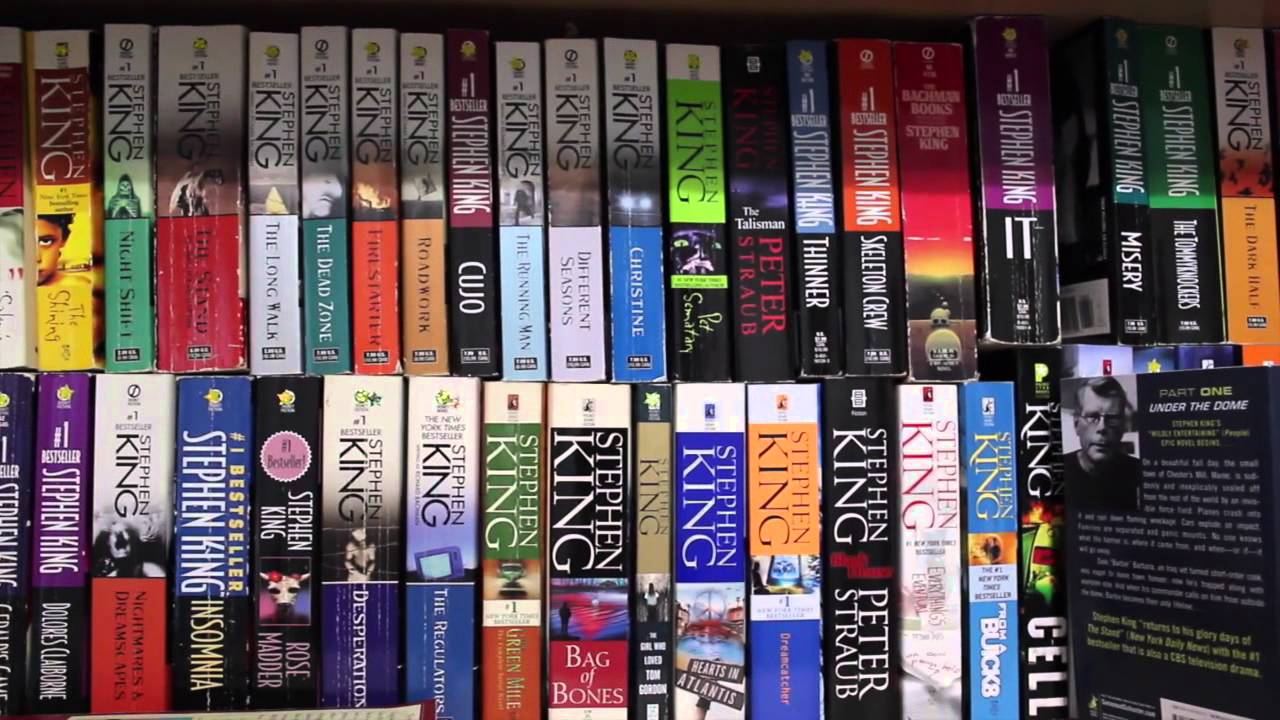
Stephen King is not my favorite author; that honor goes to Lois McMaster Bujold or Orson Scott Card, with Dan Simmons not far behind. I'm essentially a fan of science fiction. I've read the Vorkosigan series and the Ender Wiggin series more often than I can recall. That said, I felt compelled to write about Stephen King today.
I used to read a lot more often than I do now, but my life has changed drastically over the past few months and reading has assumed greater importance once again. After going to hospital for what I thought was a fairly routine test, I was told that I had a serious heart condition. Two days later I was sitting in bed after undergoing a quadruple bypass. One of the consequences of that rapid series of events is that I was forced to miss work for three months. However, it also allowed me additional time to read. Friends bought me a copy of Mr. Mercedes to entertain me while I was recuperating and I read it in less than two days. I had almost forgotten how enjoyable it could be to read a truly engaging story so I quickly picked up the other two books in the Bill Hodges trilogy and read them within a week of opening the first book.
I'm also waiting to move to a new apartment, but it isn't quite ready. All of my existing books and other possessions have been placed in storage while I continue to wait, so I am staying with the same friends who bought me Mr. Mercedes. Since reading that, I have bought another 12 Stephen King books. The spare bedroom in my friends' house is starting to resemble a library.
I wouldn't claim to be Stephen King's biggest fan; I own perhaps 40 of his books and have read about half of them so far. I'm not really a fan of horror at all, but I am open to any book or movie genre if the story is well-written. If you are somehow new to King, I also want to point out that only a small percentage of his books are horror; most have supernatural elements, but the stories have so much more depth than most books in those genres. They are not vehicles intended to simply scare the reader. That's partly why I am bothering to write this post because I wanted, no, needed to tell you how much I have been enjoying and appreciating King's writing in the past few weeks.
Although King has received plenty of recognition, there are still a lot of people who can't take his work seriously because it is fiction. Others want to label him as a horror writer or too weird. That's a pity because there is so much more to his writing than what genres he happens to operate within. I think he's successful because the roots of his stories are situations which exist in the real world. His characters and the situations they find themselves in are usually easy for us to recognize because we have experienced similar thoughts and problems in our own lives. I don't mean that I have ever been possessed, or that I have supernatural abilities, but haven't you ever found yourself agreeing with one of King's characters when they decide upon a course of action? The logic and reasoning works. I often become that character when I read whatever book it happens to be.
Like David Lynch's films, King's work is composed of normal everyday elements with a small twist or addition that changes everything. King understands what makes us tick and could probably write a wonderful book on human behavior.
My own experiences reading Stephen King's extensive bibliography have always been extremely positive. I love how normal the world of Needful Things is when the story begins and how things slowly escalate until there is utter chaos; every step makes sense. In The Dark Half, Thad Beaumont has such a believable ordinary life until his imagination creates physical manifestations. You can imagine yourself facing those problems and making similar choices to those of King's characters.
Two of my favorite movies are based on Stephen King stories; The Shawshank Redemption and The Green Mile make us think and feel. Sometimes I watch Shawshank and feel like I am Andy Dufresne. I would try to survive by creating meaning in my enforced surroundings and music would definitely be one of the tools that would keep me sane. Another common theme in King's writing is coping with adversity. How would society adjust if all the rules no longer applied? The Stand is the supreme example because of the sheer depth of the story. It's more than a simple good versus evil yarn.
After racing through the Bill Hodges trilogy, I decided to buy more Stephen King books so that I could read them before returning to work. I finally decided it was time to read The Dark Tower and I picked up the first two books. Three days later I went to buy the remainder of the series after loving the first two installments. I was easily able to locate five of the six, but The Waste Lands was out of stock everywhere within 30 miles, so I started Doctor Sleep and ordered The Waste Lands from Amazon. Now I have The Waste Lands, but Doctor Sleep is too good to put down. First world problems?
To complete my recent obsessive behavior, I bought a ticket for an evening with Stephen and Owen King, discussing their upcoming book, Sleeping Beauties. Something told me I should seize such opportunities because they don't come along very often.
I'm sure most of you already understand the brilliance of Stephen King's writing or you wouldn't still be reading. In today's world, I think it's increasingly rare to set aside the time to read a lengthy novel. There are so many things competing for our time and focusing on one thing for more than ten minutes can be a challenge. I think I wrote this because I haven't felt so enthusiastic about reading for several years. I feel like I just discovered it for the first time. I may invent fire tomorrow.
Thank you Mr. King. See you in Toronto in a couple of months.
This post is for those of you who have a passion for music. If that's not your thing, you might have trouble understanding the level of excitement I felt when friends recently sent me a package of old records that I used to own.
First, here's the background story:
I left the UK in 2005 and decided to live my life in Canada. One of my decisions was to travel light, so I started giving away some of my things to friends and neighbors. At that time, I had a significant CD collection and listened to all of my music on a Marantz CD player, through a pair of Mission speakers. To my ears, music had never sounded so clear. I didn't feel the need to transplant my remaining vinyl records to another country. I hadn't even had the means to play them for several years. I ended up donating them to one of my closest friends. We spent years attending concerts together and countless evenings listening to music on the Marantz system, so he was the obvious choice.
More than 10 years passed without me giving a second thought to my old vinyl collection. Then one day, another close friend finally convinced me to give vinyl another try. I bought a turntable. That simple sentence actually required a lot more effort than you might imagine.
There are many areas where I will happily buy a budget option, but that's not the case when it comes to music. My usual thought process is to buy one of the entry level options from a proven manufacturer. I narrowed down my search and eventually found myself choosing between an Audio Technica LP120 and a Pro-Ject Debut Carbon (DC). The Pro-Ject was my final choice. Then I needed some records.
The biggest reason for attempting to improve the way I listened to music involved Modest Mouse. I had been a casual fan of the band for years, but during 2014, I found myself playing the band's music almost non-stop. The albums that I had dismissed as being too raw finally fell into place. I loved it all. How could I listen to that spectacular music in a way that would do it justice? I found myself ordering every Modest Mouse album on vinyl (I already owned the CDs). Unfortunately, the shipment was delayed until Strangers To Ourselves was released, so my initial new record collection was limited to Ugly Casanova's Sharpen Your Teeth. I gave the album one listen and I was completely sold on the vinyl experience. I found myself sitting in the dark listening to every note as if it was being played by a musician sitting across from me.
I spent about $1,000 on records and equipment before I heard that one record. If I hadn't liked the result, it would have been an expensive experiment. If you factor in concerts, the various format changes, equipment, and remastered and bonus versions of existing albums, I have easily spent $50,000 on music over the course of my life. It's safe to say that I'm a fan and that music is important to me.
That was a longer background story than I anticipated, sorry.
Ever since I rediscovered vinyl two years ago, I've had a dilemma. Just what exactly should I buy? If I just buy everything I already own on CD, am I wasting money? How many albums do I listen to on a regular basis? Can I justify buying things I might not play even once during the year? So I decided that vinyl would be the ultimate format for those albums that do receive regular play, and I would restrain myself beyond that. To further complicate things, I knew that eventually my friends would dig through their attic and return the records I gave them 12 years ago. I never anticipated asking for them back, but I didn't understand the level of passion I would feel for the old format. When I found out they weren't being played, I explained what it would mean to me if they could possibly be returned. Once that became a certainty, I had to reign in my purchases even more. What had I owned anyway? What would be in those boxes when I finally opened them?
As a result of all these unknowns, my record collection numbered just under a hundred until a certain package arrived a few days ago. I paid the shipping, which ended up being $280. To my surprise, the package took just one day to travel from England to Canada. I collected the records and sat down to document the experience. The first thing I noticed is that the entire package fit into two record cases, one black and one brown. I recognized those cases from my past. I had bought them around 30 years ago.
What would I find inside?
I started with the heavier brown box. It appeared crammed with a mixture of 12" singles and LPs.
Would I find anything embarrassing from my extreme youth? Probably not.
The first thing out of the box didn't even have a cover. Ah yes, The Beatles 1967-1970 compilation I had bought from a friend for 50 pence while I was in school. I decided to make an Excel spreadsheet as well as add everything into my Discogs collection. I didn't actually own any Beatles vinyl until that moment. While not a band I listen to very often, it was exciting to own an original pressing of something that had sentimental value to me.
Next out of the box was an album by the Fall. My favorite band from about 1980 to 1995 was heavily represented. I became more and more amazed at what was in the box. That first album, A Part Of America Therein, 1981, was one of 17 Fall albums in the box. The first 11 studio albums were all there, along with a live album, a few compilations, and the legendary Slates EP. There were also a number of 12" singles and 45s. Try to imagine yourself in a similar situation. One of the most important bands in your life is suddenly a huge part of your record collection again. The vast majority of the albums are original pressings and most are out of print (although a few are starting to see releases again).
One thing I noticed immediately was that everything was in incredible shape. No musty smell, damage, or warping of any kind. They actually look clean enough to play in many cases, but I'll definitely clean them first.
Next out of the box was Blondie. In fact, the first six studio albums were there, as well as a 12" and some of Debbie Harry's solo stuff. I almost bought Parallel Lines at the flea market every time I saw it. I'm glad I restrained myself.
All of these thoughts about music make me think about where our musical influences originate. My parents and grandparents never showed any interest when I was growing up, so my early favorites came from listening to the radio. Then, when I was about 12, my neighbor introduced me to the music of David Bowie. That has stuck with me for more than 40 years and I still own most of Bowie's output. Perhaps my biggest influences came from school and then the John Peel show. You can easily see Peel's influence here as 39 of the 111 records are by The Fall. I was delighted to find more bands originally discovered by listening to Peel's show. This first box included albums and EPs by Half Man Half Biscuit and Yeah Yeah Noh. Bands discovered at school included The Damned and John Cooper Clarke, so I was delighted to find Damned Damned Damned and two Clarke albums hiding in the box.
And so to the second box. It felt a lot lighter than the first because about half the records were 7" singles. That said, it was still an exciting package. The most welcome and unexpected record was definitely the original pressing of Joy Division's Unknown Pleasures. I remember buying it in the final years of school. The recent 180g remaster sounds fantastic, but it's incredible to own the original again. The black textured sleeve with its iconic logo was in superb shape.
Other welcome finds in the second box included singles from The Wedding Present, Sugarcubes, Pavement, Magazine, and Throwing Muses. My Muses vinyl collection is severely lacking and most of the albums are out of print, but it is good to have a few more singles and EPs to play on vinyl. There were a few other surprises, such as a Bill Nelson single on red vinyl and the Buzzcocks' Spiral Scratch EP, which has always been a favorite of mine.
Music is like a time machine. It allows us to travel back and experience all kinds of things, good and bad. The memories attached to these particular records are mostly very good and it's great to have doubled the size of my fledgling collection. I can't thank my friends enough for the effort involved in making this happen.
For those of you who like statistics as much as me, here is a full list of what was in the boxes: