Showing posts with label british. Show all posts

Friday, July 1, 2011

Four Weddings and a Funeral: Good observational humor

Four Weddings and a Funeral (comedy, romance, drama)
Directed by Mike Newell
Starring Hugh Grant, Andie MacDowell, Simon Callow and James Fleet

Metro-Goldwyn-Mayer | 1994 | 117 min | Rated R | Released Jan 11, 2011

Video:
Video codec: MPEG-4 AVC
Video resolution: 1080p
Aspect ratio: 1.85:1

Audio:
English: DTS-HD Master Audio 5.1
French, Italian, Spanish: DTS 5.1
Polish, Portuguese, Spanish: Dolby Digital 2.0

Subtitles:
English SDH, Catalan, Danish, Dutch, French, Greek, Hebrew, Italian, Norwegian, Portuguese, Spanish, Swedish, Turkish

Discs:
Single 50GB Blu-ray Disc

The Film 3.5/5

Four Weddings and a Funeral was released in 1994 and was a breakout role for Hugh Grant. If you have seen Notting Hill, Love Actually or the Bridget Jones movies, you’ll know that Grant plays similar characters in every movie. Writer Richard Curtis wrote all of those screenplays and understands what Grant can do. He typically plays eloquent characters who are a bit confused about what they want in life. He has great comic timing and plays his roles with a lot of charm.

The movie opens with Charles (Grant) late for a wedding. We see him dash around with his flatmate, Scarlett, and drive like a maniac to reach the church on time. He’s the best man, but he’s forgotten to bring the rings. This opening sequence is pretty funny and sets the scene well.

Almost all of the action takes place at the four weddings and the funeral mentioned in the title. We are introduced to Charles and his friends, and they appear at every wedding. Tom (Fleet) is one of the richest men in Britain, but is clueless about women and doesn’t have a girlfriend. He’s amusing and harmless and reminds me of Colin Firth’s character in Love Actually. Gareth embraces life and throws himself into any situation without stopping to worry whether he’s making a fool of himself, while Matthew is his lover.


The story is full of good observations about human behavior. If you have ever been to a wedding, you’ll recognize the types of character portrayed in the movie. Some are there because they genuinely want to be, but others tag along as an excuse to get drunk or to seek romantic partners of their own. Some are touching and others are embarrassing or annoying.

At the first wedding, Charles encounters Carrie (MacDowell). He likes her instantly and changes his plans so that he stays at the same inn. They have a romantic moment, but it quickly ends when Carrie announces that she has to return to America.

The rest of the movie shows meetings between Charles and Carrie at each of the weddings. Their situations change each time, but it’s clear that they like each other. Charles runs into previous girlfriends continually, but considers marriage as something to be avoided for the most part. In contrast, Gareth thinks marriage is a good way to get out of a boring conversation.


Charles has a brother, David, who is deaf and communicates through sign language. That sets up a few of the funnier scenes when Charles lies about what David is saying. Another interesting character is Father Gerald; a young priest played by Rowan Atkinson. Most American viewers will know him as Mr. Bean, but he’s appeared in numerous movies of this type as well as Blackadder, which was a TV series also written by Curtis. Father Gerald isn’t a very good priest, but he’ll probably make you laugh.

The movie succeeds because the characters are believable and similar to people we have encountered in our own lives. It’s easy to identify with the main characters because the story rings true. It’s above average in terms of romantic comedies and also works as pure comedy. Even if you don’t care about Charles and Carrie, there’s plenty to smile at. I wouldn’t rate Four Weddings and a Funeral up there with Love Actually, but it’s worth seeing.

Video Quality 3.5/5
Unless you bought Target’s exclusive version in January, this is the first time you’ll have had the chance to see Four Weddings and a Funeral on Blu-ray. The result is a clear upgrade, as you would expect, but it’s not a stellar transfer by any means. The movie is plagued with minor scratches and dirt throughout the 118 minutes. The image is soft at times and clarity never threatens to dazzle the viewer. Colors are accurate, but a little subdued. I briefly considered a 3/5 rating, but I think most of the presentation deserves the extra half point. Fans of the movie should buy it, but temper expectations.

Audio Quality 4/5
The DTS-HD Master Audio 5.1 is more than adequate, but this isn’t the kind of movie that makes full use of sound. It consists of dialogue-driven scenes for the most part, although the surrounds do add depth in the wedding reception scenes. I thought I detected minor sync issues in a couple of places, but they were brief.

Special Features 3/5

The special features are all presented in standard definition and were included on the DVD version of the movie.

Commentary with Director Mike Newell, Producer Duncan Kenworthy and Writer Richard Curtis.

In the Making (7:45)

The Wedding Planners (29:48) – A longer look at how the movie was made.

Two Actors and a Director (5:41) – Explaining how Grant and MacDowell were chosen for the lead roles.

Deleted Scenes (4:02) – Six brief scenes.

Promotional Spots (3:26)

Theatrical Trailer (2:08)

Four Weddings and a Funeral is a lot of fun, and works well for fans of British humor. Grant and MacDowell play their roles well. The Blu-ray offers a reasonable upgrade and is worth adding to your collection if you’re a fan of the movie or if you like romantic comedies. The price is very attractive at the moment and is readily available for under $12. The best price at the time of writing is $8.49 at Barnes & Noble. 

Overall score 3.5/5 

Return to index of every review on the site.

Wednesday, May 18, 2011

Control: A fitting tribute to Ian Curtis

Control (drama, biography, music)
Directed by Anton Corbijn
Starring Sam Riley, Samantha Morton and Alexandra Maria Lara

Alliance | 2007 | 122 min | Rated R | Released Mar 08, 2011

Video:
Video codec: MPEG-4 AVC
Video resolution: 1080p
Aspect ratio: 2.35:1

Audio:
English: DTS-HD Master Audio 5.1
English, French: Dolby Digital 5.1

Subtitles:
None

Discs:
50GB Blu-ray Disc
DVD copy

The Film 5/5

Control won 25 awards, including three at Cannes, and was nominated for two BAFTA awards in the UK. The film is yet to receive a Blu-ray release in the US, but has been released in Germany and Canada. This review covers the Canadian version, which is locked to Region A.

The film made just under $8 million worldwide owing to the dark subject matter and the fact that Joy Division’s music still isn’t widely known. That’s a shame because Corbijn (The American) has made a wonderful film.

This is the story of Ian Curtis who was the lead singer for Joy Division until his suicide in 1980. He died on May 18, so it was 31 years ago today at the time of writing.

I wanted to see the film because Joy Division is still one of my Top 5 bands 30 years later. I know who made me the tape so that I could hear debut album Unknown Pleasures for the first time and I remember who I was with and where I was when the news leaked that Curtis was dead.


It wasn't easy to find a theater which was showing the film when it was released so I ended up hunting down an obscure run-down cinema in downtown Toronto to even see it. About six other people showed up. Every single one appeared deeply moved and on the verge of tears after the film. I’m happy to finally own it on Blu-ray.

The main problem I have with this review is that I went in loving the band and knowing most of the story. Did it work for me because of that, or is it truly a great story that will appeal to people who know nothing about Curtis or Joy Division? It partly depends on whether you like the dark, brooding music, but it works for some people who don’t like the band at all.

The film is bleak. It appears in black and white and is set in a northern town in England (Macclesfield). The houses are small, the streets are narrow and it rains often. This is all true. It's a depressing part of the country. The dreary setting matches the atmosphere of the music and the band’s tale. The film shows how the band came into existence and their early successes such as recording, getting a recording contract and appearing on TV, but this isn’t a true biopic.

Although I knew the lyrics and understood what the words meant before I saw the film, I didn't know the origin of those lyrics. The film ties together some of the events in the life of Curtis with the origin of the songs. When you see what She's Lost Control is really about, it adds new layers of meaning. If you think Love Will Tear Us Apart sounds like a pop song, it takes on a more sinister tone when you understand why he wrote it.

The actors rehearsed together to get the songs right so that they could play them in the film rather than miming. Corbijn never intended to include real performances of the music, but the "band" convinced him. The first time I heard the first note of the first song played in the film, I felt a huge surge of emotion.


Sam Riley manages to look very similar to Curtis and must have spent a long time studying the few examples of Curtis performing the songs. He mimics the actions perfectly and sounds like him too. It was almost like stepping back in time and experiencing a Joy Division concert. Samantha Morton gives a strong performance, managing to look like a young girl and then his wife and the mother of his child.

There's a lot of truth in this film too. Deborah Curtis (his wife) wrote the book Touching From A Distance which tells what really happened. The screenplay was adapted from that book and the details are as true as possible. Corbijn shot some of the iconic photographs of Curtis and the band while working as a photographer for the New Musical Express in England. This was a labor of love.

The result is a moving drama detailing the final few years of Curtis’s life. It doesn't hold much back, showing his faults as well as his redeeming qualities. It's the story of a young man (23 when he died) who was in a situation he couldn't control. Loving and hating two different women, a parent at a young age, success at a level that was hard to imagine and all the while dealing with epilepsy. His character says in the film that the audience didn't realize how much he gave during a performance, or how draining it was and how painful to access the emotions to perform those songs. To the audience, they were songs. To Curtis, they were hideous parts of his life.

I found the film incredibly moving, haunting, captivating, happy and sad. I'm glad that Curtis will be introduced to new audiences through this film. Joy Division is important to me and Control is one of the most prized Blu-rays in my collection.

Video Quality 4.5/5
The film was shot in color and transferred to black and white and the images suit the mood of the film perfectly. Detail is sharp throughout and the print is clean and natural in appearance. I have also seen the German release and the presentation is similar. It’s hard to imagine the film looking any better.

Audio Quality 5/5
The sound is the best I have ever heard where music is concerned. It’s as good as listening to a CD on high quality equipment. The songs have a lot of depth and range and it’s easy to pick out individual instruments. The dialogue is also clear.

Special Features 4/5

Audio commentary with director Anton Corbijn.

Making of Control, featuring interviews with Corbijn, the writer and some of the actors (24 minutes).

Extended live performances from the film:

Transmission
Leaders of Men
Candidate

Music Videos:

Atmosphere – Joy Division
Transmission – Joy Division
Shadowplay – The Killers

Two theatrical trailers.

Joy Division’s music isn’t for everyone, but this is an interesting look at the life of Ian Curtis whether you are a fan or not. The presentation from Alliance is superb and I would recommend it to anyone capable of viewing Region A material. The actors do a wonderful job and the music sounds authentic. It will send shivers down your spine.

Wednesday, May 4, 2011

Kes: Another triumph for Criterion

Kes (drama)
Directed by Ken Loach
Starring David Bradley, Colin Welland, Brian Glover

Criterion | 1969 | 110 minutes | Rated PG-13

Video:
Video codec: MPEG-4 AVC
Video resolution: 1080p
Aspect ratio: 1.66:1

Audio:
English: LPCM Mono
English: Dolby Digital Mono
English: LPCM Mono
English: Dolby Digital Mono (less)

Subtitles:
English SDH
English SDH (less)

Disc:
Single 50GB Blu-ray Disc
Region A locked

The Film 4.5/5

The film contains brief nudity and scenes which may disturb young children.

Kes is a very British film, winning two BAFTA awards from its five nominations. Colin Welland won for best supporting actor and was the only professional actor in the film. David Bradley won for most promising newcomer.

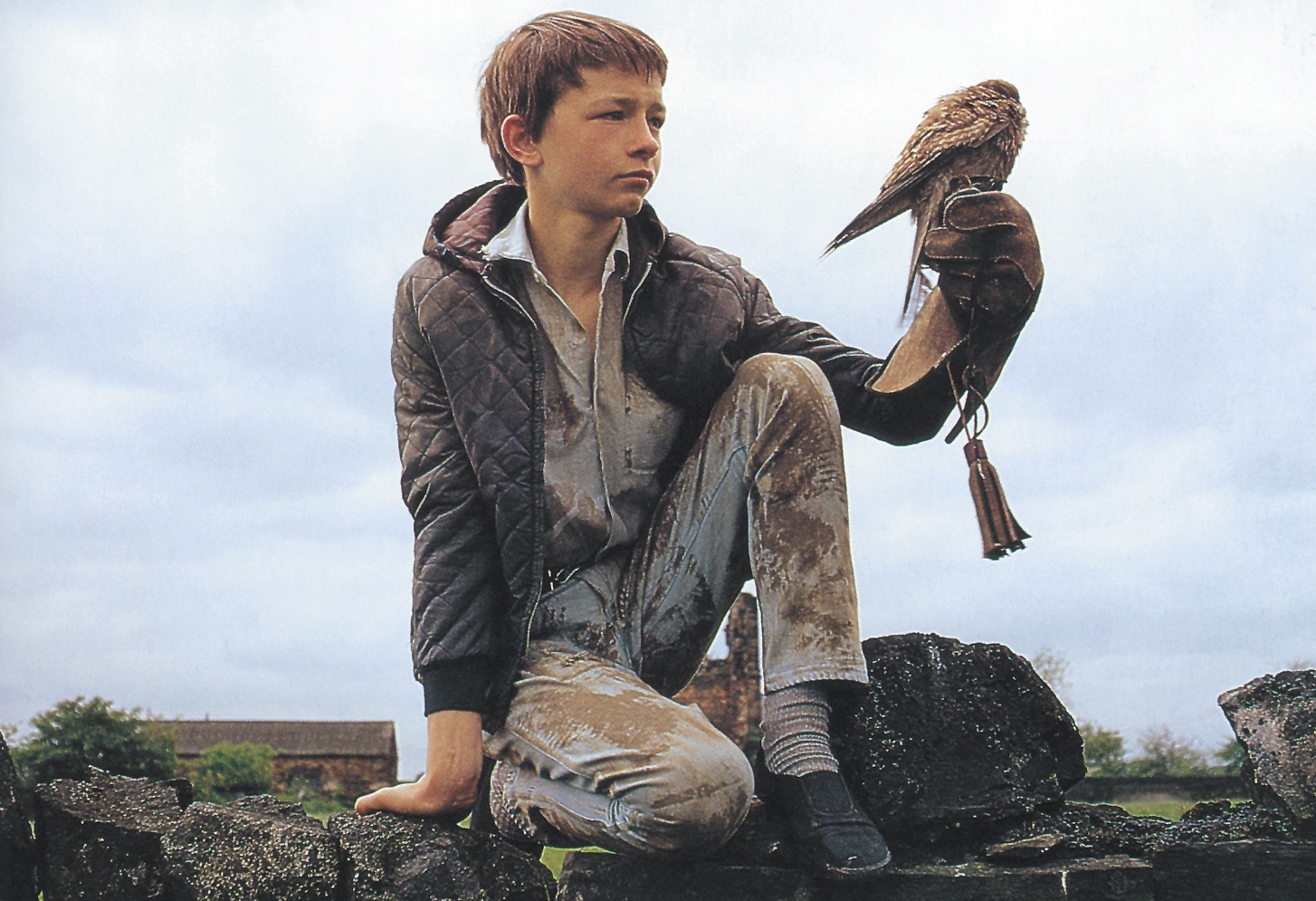
The story deals with a troubled young boy, Billy Casper (Bradley). He is bullied by his older brother at home and similarly treated by his peers in school. He’s insolent, not above lying or stealing and does little to encourage people to like him. He’s a loner.


The setting is Barnsley, Yorkshire, in the north of England. If you have ever seen this part of England depicted in other films, you’ll know that it’s a poor area populated largely by working-class people. In the 1960s, that was very much the case. Billy’s brother worked in a coal mine, as did most of the town. The two had to share the same bed, so you can imagine how poor they were. 

Anyone unfamiliar with British accents may find the thick Yorkshire dialect hard to follow. It’s the main reason that Kes wasn’t given a wide release outside England. I’m completely at home with the accent because my grandfather came from Barnsley. He often talked about his tough upbringing and it gives the film additional meaning for me. His father was a miner and my grandfather only escaped that fate by joining the army.


We see Billy on his paper route, taking time off to read his comic. He also steals eggs from the milkman. Milk is still delivered to each home in the UK in this manner. When his mother and brother go out to a bar on the weekends, Billy is left at home on his own. His brother beats him and the house is generally filled with the sound of his mother and brother arguing loudly. He doesn’t say much at school, but is often the target of bigger boys. 

Early in the film, Billy is taking a walk through the countryside and spies a kestrel. He watches for a while and sees that two kestrels are taking food to a nest. After stealing a book about falconry from a local bookstore, he climbs up to the nest and steals a young kestrel. The bird provides an escape from his unpleasant existence and quickly becomes the focus of his life. This seemingly uneducated boy has discovered his passion. He reads the stolen book and trains the kestrel.


One day, in class, he is asked by a teacher, Mr. Farthing (Welland), to tell the other kids a true story about his life. He’s reluctant and says that he doesn’t have any, but one of the kids mentions his kestrel. This leads to one of the strongest and most emotional scenes in the film. He’s disinterested in everything he is taught and the people around him, but talking about the bird is a different matter. Billy comes alive when he describes how he devotes his time to feeding and training the bird, who he names Kes. Farthing is engrossed in the story and sees for the first time that there’s more to Billy than he imagined. He starts to look out for the boy and even visits him to watch him train Kes. It’s a strong performance from Welland and he deserved his BAFTA award.

The other teachers wouldn’t have a job in modern society. They shout continually and are deeply suspicious of the kids’ behavior. The headmaster uses the cane and doesn’t seem to mind whether those being punished were truly to blame. The gym teacher cheats at soccer and punishes Billy with a cold shower for conceding a goal. Farthing is the only one who looks at the kids as if they are young people with a chance to make something of their lives.


There’s a strong political message in the film, confirmed during interviews in the special features, that many kids have no chance to escape their miserable reality. Billy visits a careers officer who only seems interested in placing him in a pigeon hole. He’ll either work in an office if he has the aptitude, or he’ll become a miner. The writers talk about how two-thirds of their generation suffered a similar fate. When we see Billy so animated, talking about Kes, it’s a sign of his true potential. Will it be recognized or will his life be written off by others as insignificant? This is the essence of the film, along with how Billy substitutes friendship with his love for Kes.

Billy’s dishonest nature eventually becomes a problem for him and there are some extremely sad scenes. 

The story is based on the book A Kestrel for a Knave by Barry Hines. Bradley was 14 when the film was made and was chosen from pupils who attended the school mentioned in the book. All of the children came from one of three schools in the town. The gym teacher (Brian Glover, Alien 3) was a real teacher at the time and Kes was his first film.

Video Quality 4.5/5
The film was made in 1969 on a low budget, but looks wonderful. Criterion's restoration was approved by director Ken Loach. There are occasional white speckles and softness, but the new transfer looks natural and full of detail. This is exactly what I would expect from Criterion, who, along with Disney, continue to maintain the highest possible standards.

Audio Quality 4/5
Two options are offered on the menu: The filmmaker’s original soundtrack with production dialogue (English LPCM 1.0) and the internationally released soundtrack with postsync dialogue (English Dolby Digital 1.0). I recommend the original version. Everything is clear, including the dialogue, but some viewers may benefit from the English subtitles due to the heavy Yorkshire accent.

Special Features 5/5

Making Kes (45 minutes, 1080p) tells you everything you might want to know about the film. Criterion interviewed director Ken Loach, producer Tony Garnett, actor David Bradley and cinematographer Chris Menges in 2010 to discuss their recollections.

The South Bank Show (50 minutes, 1080i) looks at the career of Ken Loach.

Cathy Come Home (77 minutes, 1080i) is an early film from Loach and Garnett shown here in its entirety.

Trailer (3 minutes, 1080p)

Booklet (22 pages) including an essay by Graham Fuller

Kes is a wonderful human interest story with a number of deeper themes thrown into the mix, although the story ends rather abruptly. The largely amateur cast was authentic and did a good job of portraying life in Barnsley. It’s on record at IMDB as being director Krzysztof Kieslowski’s (The Double Life of Veronique, Three Colors Trilogy) favorite film. I wouldn’t quite go that far, but it’s certainly worth owning. Amazon.com has it at the bargain price of $18.99 at the time of writing. I’m glad I took advantage.


Friday, April 29, 2011

The King's Speech: Unexpected appeal

The King's Speech (biography, drama, history)
Cast: Colin Firth, Geoffrey Rush, Helena Bonham Carter, Guy Pearce, Derek Jacobi
Director: Tom Hooper

Starz/Anchor Bay | 2010 | 118 min | Rated R | Apr 19, 2011

Video:
M-PEG4 AVC | 1080p | 1.78:1

Audio:
English DTS-HD Master Audio 5.1

Subtitles:
English SDH, Spanish

Discs:
Single 50GB Blu-ray Disc

Film 5/5

Have you ever been involved in public speaking? Even a small audience can be enough to take you out of your comfort zone. Imagine that you stammer and you're required to speak live to more than a quarter of the Earth's population. Throw in the fact that your audience is frightened due to the impending war against Hitler's Germany. A confident, optimistic and inspirational speech is essential.

That's the situation King George VI found himself in.

Historical dramas generally bore me. I'm not particularly interested in the royal family, despite living in the UK for the first 43 years of my life, and have no love for them at all. But for some reason, this works.

Tom Hooper directed the excellent The Damned United, but this is even better. He chose to shoot most of the film in dark rooms rather than focus on the potential splendor offered by Buckingham Palace. Apart from a scene inside Westminster Abbey, most of the rooms are drab. The story is character-driven and works because of the acting rather than the setting.


Colin Firth gives a brilliant performance as King George VI, although he isn't king when the film begins; he's the Duke of York. We see him stumble over an early speech in the 1920s and his wife, Queen Elizabeth (Carter), seeks a speech therapist to help him overcome his impediment.

Doesn't that sound boring?

She finds Lionel Logue (Rush), who has a practice in London's famous Harley Street, and forces her husband to see him. Rush is great as the Australian therapist and supplies much of the humor in the film. The two initially enter into a doctor/patient relationship and eventually become friends.

If I had read that premise without knowing anything else about the story, there's no way you could have convinced me I would care about the characters or the outcome. But the quality of the acting overcomes all that and I did end up caring about a historical speech delivered by a monarch in whom I had zero interest. That says something about the power of this film.

Fans of the Harry Potter movies will be familiar with Michael Gambon, Timothy Spall and Helena Bonham Carter. It's interesting to see them here in serious roles.


The driving force of the story is the friendship between Logue and the future king. Indeed, Logue insists that the two function as equals and calls the Duke Bertie. He apparently has little respect for the monarchy and makes fun of it throughout. Strangely, I'm reminded of The Shawshank Redemption. The two main characters are in a difficult situation and yet manage to form an unlikely friendship, with each sustaining the other.

We are shown early attempts by renowned physicians to cure the Duke's stammer, but no progress is made. The Duke's wife finds Logue and arranges an appointment. Logue's methods are unconventional to say the least and provide some of the film's humor. It's a big step for the Duke to trust this irreverent foreigner and relax enough to make progress.

If you allow yourself to be drawn into the story, a peculiar thing happens. Rather than focusing on Firth's technique for stammering, you will start to think about the man he's portraying. There are scenes showing how he behaves when he's alone with his wife and his two little girls, and how they accept him for who he is.

Firth's portrayal isn't over the top. He's a reserved man who isn't used to speaking up for himself. Over the course of the story, we see him grow. He finds that he has a voice.


The R-rating is for language and it absolutely has to be there for the story to work so effectively.

The technical aspects of the film are superb. The sets, costumes, casting, sound and pacing are close to perfect. It won four Oscars: best picture, best director (Hooper), actor in a leading role (Firth) and original screenplay (David Seidler). During his acceptance speech, Seidler revealed that he used to stammer. That explains why he was able to portray that fear so well.

The film won't appeal to everyone. It succeeds because of the dialogue and the strength of the story. There's no action and very little romance. If you like human interest stories, give it a try. It's among the best in that category.

Video Quality 4/5
The video presentation isn't spectacular. The color palette is faded and wintry, filled with grays and blacks. There's occasional noise, such as in the dark shots taken in Logue's elevator. Detail is inconsistent, but strong in places. Most of these appear to be the intended look of the film, but it's slightly disappointing overall.

Audio Quality 4/5
The sound does exactly what it's supposed to do. There are a few instances of crowd noise and background sounds in the streets of London, but this is a film rich in dialogue. It comes across as clear and even throughout.

Special Features 3.5/5
The features appear sparse, but what's present is certainly worth checking out. I would be interested in a more comprehensive package in the future.

Director Tom Hooper's audio commentary is extremely informative.

There's a 23-minute feature with cast and crew detailing the making of the film.

A 22-minute Q&A session with Hooper, Firth, Carter, Pearce and Claire Bloom seems to end all too quickly.

Two speeches from the real King George VI show exactly what Firth achieved. As well as the stutter, Firth had to incorporate a slight impediment when using the letter R. One of the speeches appears at the end of the film, so you can see just how accurate Firth's portrayal was.

The Real Lionel Logue is a 10-minute feature with his grandson Mark. We learn that he discovered some of Logue's diaries containing actual accounts of the meetings with the Duke. A few lines of dialogue were taken from those accounts and used in the film.

And finally, a Public service announcement from the Stuttering Foundation.

It's hard to compare this to any other movie. There's nothing quite like it. I have already mentioned that the friendship reminds me of The Shawshank Redemption, but the overall tone is very different. The Diving Bell and the Butterfly is another brilliant film about a man trying to overcome his inability to communicate, although in a more extreme way.

I saw every best picture nomination last year and this was top of my list. Inception and Black Swan both impressed, but for a combination of an engaging story and the technical aspects of making a film, The King's Speech deserved its Oscar success. See it if you enjoy dramas or period paces driven by dialogue.

Overall score 4.5/5 

Click here to find out where The King's Speech ranks in My Top 20 Dramas.


Return to index of every review on the site.